
 written by Chris Familton
In this day and age of web publishing and the availability of online tools for anyone to become a ‘music journalist’ it is becoming increasingly hard to find creative, constructive and well thought out music criticism. Sure we have the Pitchfork, The Quietus, Mess & Noise, FasterLouder etc who all generally provide well measured appraisal of music but for every quality outlet there are a thousand pretenders and hobbyists espousing their personal opinions to the masses. The time therefore is ripe for music criticism to regain its place as an area of serious literary analysis and there are many voices out there who began (and continue) to write in the print medium and have contributed to the benchmarks of journalism that readers have turned to for the last few decades. Writers like Greil Marcus, Michael Azzerad, Sylvie Simmons, Simon Reynolds and Mat Snow have all carved out their own niches within music analysis through features, reviews and books on all manner of musicians and musical topics.
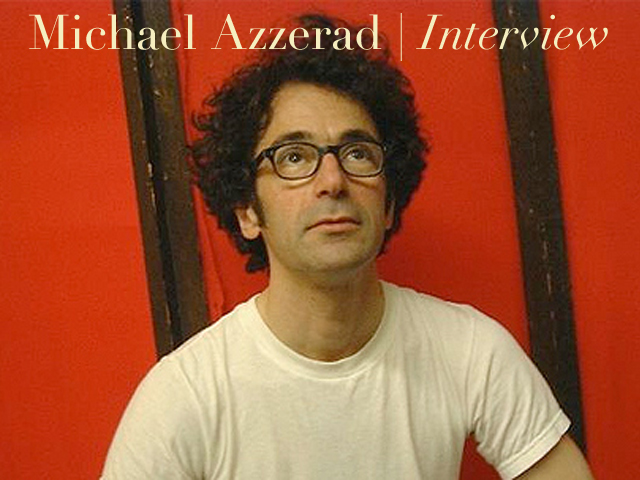
On the eve of a visit to Australia to speak at the Big Sound Event in Queensland, Michael Azzerad took the time to chat to FasterLouder about the current state of music journalism and his experiences as a writer.
Azzerad’s published books have focused on USA-centric acts like Nirvana and American underground rock but his tastes do extend to a healthy respect for music from this part of the world. “Duke Ellington famously said, “There are two kinds of music: good and bad.” And so I don’t favor music from a particular place, I just like good music wherever it comes from. That said, Australia has certainly birthed some of my favorite bands: the Go-Betweens, Midnight Oil, the Saints, the Bee Gees, feedtime, Hoodoo Gurus, and AC/DC, among many others. Australian rock music has definitely made me very happy throughout my life. I discovered the Grates a while back and they’re totally fun and charming; their drummer is fantastic too. As far as New Zealand goes, the Chills and the Verlaines are essential to me. Split Enz were great too and there are many others, especially on the exemplary Flying Nun label. And lest we forget, The Rocky Horror Show was written by a New Zealander. It’s amazing how such a small population has produced such a high number of excellent bands. Must be the excellent sauvignon blanc down there.”
Getting started in the music writing business often involves lucky breaks and knowing the right people. Azzerad fell into the career by chance and circumstance. “I really did not like to write in college. In fact, I would rather have had my fingernails ripped out with pliers. That was because I was so intimidated by the fact that other people had already written about what I was writing about — sometimes for millennia, literally. But then one of my first jobs after school was working at a place that sold rock videos to nightclubs. They had their own magazine, and the editor, a very prescient woman named Lyn Healy, figured that since Michael a) had gone to college and b) played drums in rock bands, that he could also write about music. It came very easily and rather well — nobody had yet written about the records I was reviewing, I really knew what I was talking about, and I felt free. Within a couple of years I was writing for Rolling Stone,” he explains.
Interviewing a musical hero can be a daunting experience for even the most experienced writer as Azzerad recounts some of his personal highlights to date. “I made Ray Charles laugh once. We were doing a phoner, talking about Stevie Wonder’s induction into the Rock & Roll Hall of Fame. I asked him why Wonder deserved the honor and he said, “because Stevie’s got soul.” And I said, “Mr. Charles, if you say someone’s got soul, that’s like the Pope saying someone is Catholic.” He found that very amusing. On another phoner, I interviewed the Rev. Al Green about making “Let’s Stay Together.” I asked him eight questions and he answered each one in a different accent. I interviewed Paul McCartney recently and he was so thoughtful and nice. I picked up the phone and this familiar voice says, “Hello, Mike! It’s Paul! From England!” Interviews with brilliant, inspiring people like Ian MacKaye, Sub Pop co-founder Bruce Pavitt and Mike Watt have changed my life because they showed me new ways of looking at music, musicians and the world in general,” he enthuses.
With the current state of music journalism in serious transition and evolution Azzerad believes that blogs have played a part in the watering down of quality music writing. “Blogs have severely devalued well-written criticism,both in a commercial and an aesthetic sense. Very few people are very good writers, and now an exponentially greater proportion of writing about music is quite poor. On the other hand, writing about music means actively thinking about music, and that can only be a good thing,” he opines.
Where to for the future of the discipline then? Azzerad has a clear view of where it is all heading. “We’ve seen the last of fanzines; they make little economic or ecological sense in the internet age. Music blogs are the new grassroots medium and they will continue to flourish. Collected essays are already a thing of the past since everything is accessible on the web. The future of professional music journalism will be the big-budget reporting project — not something a punter can do in his or her pajamas at the computer but an extended work of reportage that only an exceptional writer with experience, knowledge and substantial resources can produce.”
Azzerad always seems to be looking forward to the next project and he has a couple of exciting things in progress. “I just finished editing the autobiography of Bob Mould, the singer/songwriter/pro wrestling producer whose former bands include Hüsker Dü and Sugar, as well as many albums of outstanding solo work. Bob wrote the book; I was truly an old-fashioned line editor, a largely lost art. Bob has a great story, he’s a good writer and a hard worker, and it was a great experience. That will be published in the US in spring of 2011.”
“I recently contributed a long piece about popular music in the ’70s to an upcoming history of rock written by a veritable who’s who of music journalists; I’m honored to be in the same book as greats like Lenny Kaye, Dave Marsh, Greil Marcus and Peter Guralnick. I’m currently researching a book proposal. I have to keep the specifics under wraps but it’s a very ambitious idea and I’m both daunted by and excited about the prospect of making it a reality. And, like everybody else and their brother, I have a blog. It’s called You and What Army and it seems to amuse, intrigue or irritate people,” showing that even the well established writers can’t afford to (or avoid the temptation of) being part of the digital self-publishing revolution.
This interview first appeared on FasterLouder


 Doubtful Sounds