

written by Chris Familton
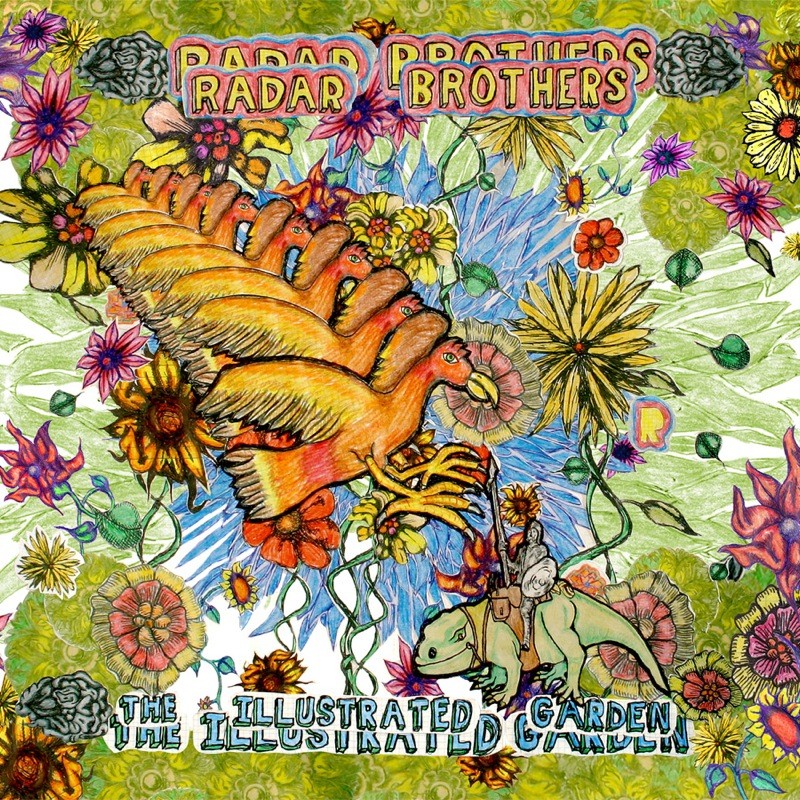
 Over the course of five albums Jim Putnam has been the one constant in Radar Brothers. It is his austere voice that has constantly steadied the ship and prevented the band from slipping out of sight. The Illustrated Garden is employs a new rhythm section who subscribe to the ‘less is more’ policy and in doing so they provide some wonderfully restrained moments that make this a particularly satisfying listen.
Space and time are often bandied about in musical discussions and critique and it is generally considered to be a valuable skill to show restraint and allow the music to breathe. Putnam sees the value in that approach and from the opening line of the first song Dear Headlights he establishes the mood of the following ten tracks by pacing and spreading his words, letting them hang in the air before he moves onto the next phrase.
Melody, particularly in the vocals, is rife throughout The Illustrated Garden and not always in the form of words. Putnam possesses a a deep rich voice alongside a sweet falsetto and he weaves the words through these opposing tones with great skill. It means he can juxtapose indie, 60s pop and americana flavours, often in the same song, with relaxed and seamless ease. These compositional abilities come to the fore on songs like Chickens with its hazy pop and gloriously hummable series of da-da-da-da’s rising and fading through the mix of gently distorted and warmly buzzing guitars.
Any criticism that reveals itself on repeated listens is directed at the pace of the album. Though it effectively renders a relaxed aesthetic it does allow the dreaminess to lazily wander a little too freely. You get the sense that they could toughen up the sound and still stay within their comfort zone. These observations are born of repeated listens and a critical devil’s advocate approach so should hardly amount to a deterrent to listening to the album.
Sitting comfortably in the company of Lambchop, Pinback, Bill Callahan and Silver Jews is a great place to be and though they don’t reach those peaks they have produced a record that feels layered by way of its simplicity and one that is a refreshing reminder of the power of understatement and the benefits of allowing musical interaction rather than collision.
A version of this review appeared on Wireless Bollinger

 Doubtful Sounds